Soft Homemade White Bread
This homemade white bread recipe makes a soft, fluffy 2-pound loaf that’s perfect for sandwiches, morning toast, French toast, or a good old-fashioned grilled cheese. You don’t have to be an experienced bread maker to pull this off!
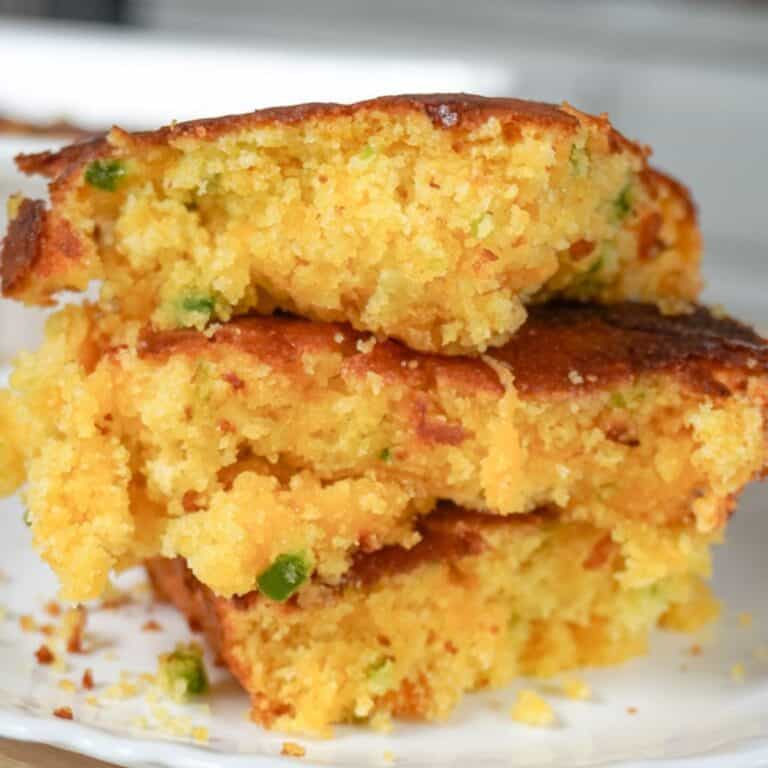
Be sure to check out this loaf of Homemade Jalapeno Bread and these Garlic Knots while you’re here as well!
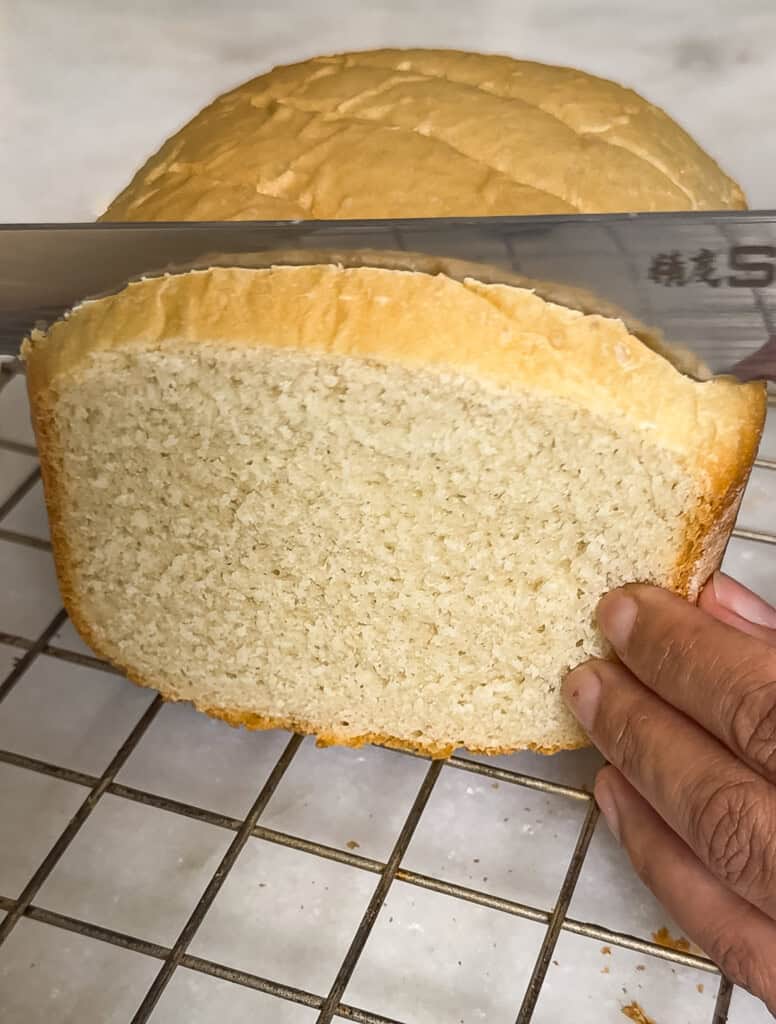
Homemade Bread in the Oven or Bread Machine
I make mine in my bread machine because I love being able to add the ingredients, press a button, and let it do its thing. But if you don’t have a bread machine, don’t worry! I’m also sharing how to make this same bread using a mixing bowl and your oven.
Whether you’re trying to save a little money on groceries or just want to know exactly what’s going into your family’s bread, this is one of those recipes you’ll find yourself making over and over again.
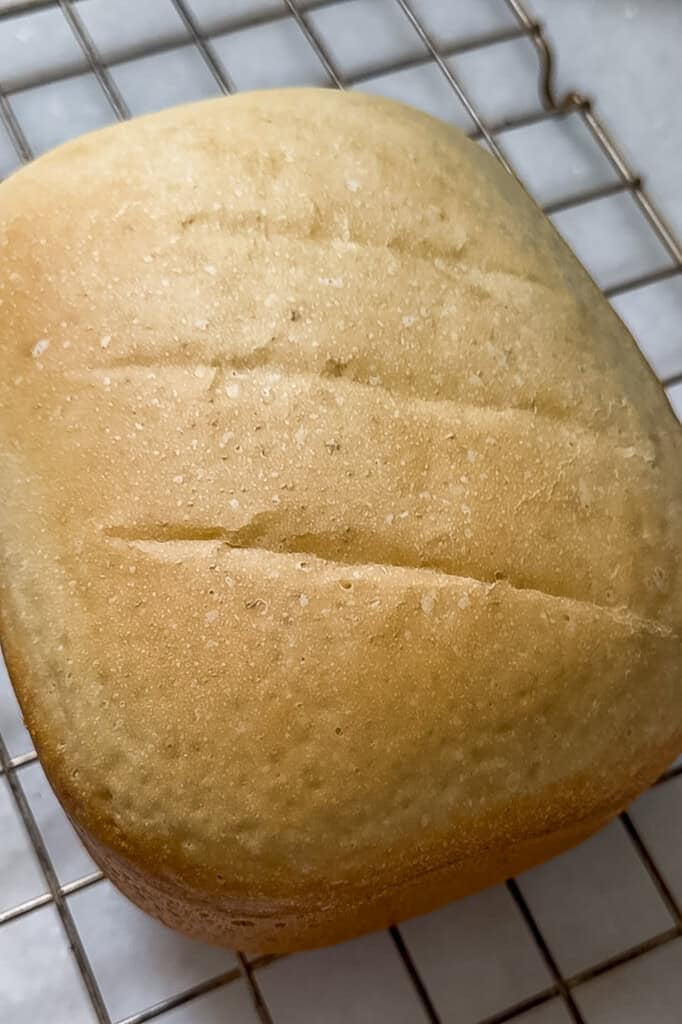
Ingredients for Easy White Bread
- Bread flour: This is what gives the bread its structure and helps create that soft but slightly chewy texture. Bread flour contains more protein than all-purpose flour, which helps the dough develop gluten and rise beautifully.
- Warm water: Hydrates the flour and helps activate the yeast. For hand mixing, aim for water around 100–110°F. You want it warm, not hot.
- Unsalted butter: Adds richness and helps create a soft, tender crumb. It also gives homemade bread that delicious buttery flavor.
- Granulated sugar: Adds a subtle sweetness and supports yeast fermentation. This isn’t meant to be a sweet bread, but the sugar helps balance the flavor.
- Salt: Enhances the flavor and helps control the yeast activity so the bread rises properly.
- Instant yeast: Gives the dough its rise and creates those little air pockets that make homemade bread light and fluffy.:
How to Make Soft Sandwich Bread
See recipe card for ingredient quantities and full instructions.
This is my favorite method when I want fresh homemade bread without doing all the work myself. The bread machine handles the mixing, kneading, rising, and baking.
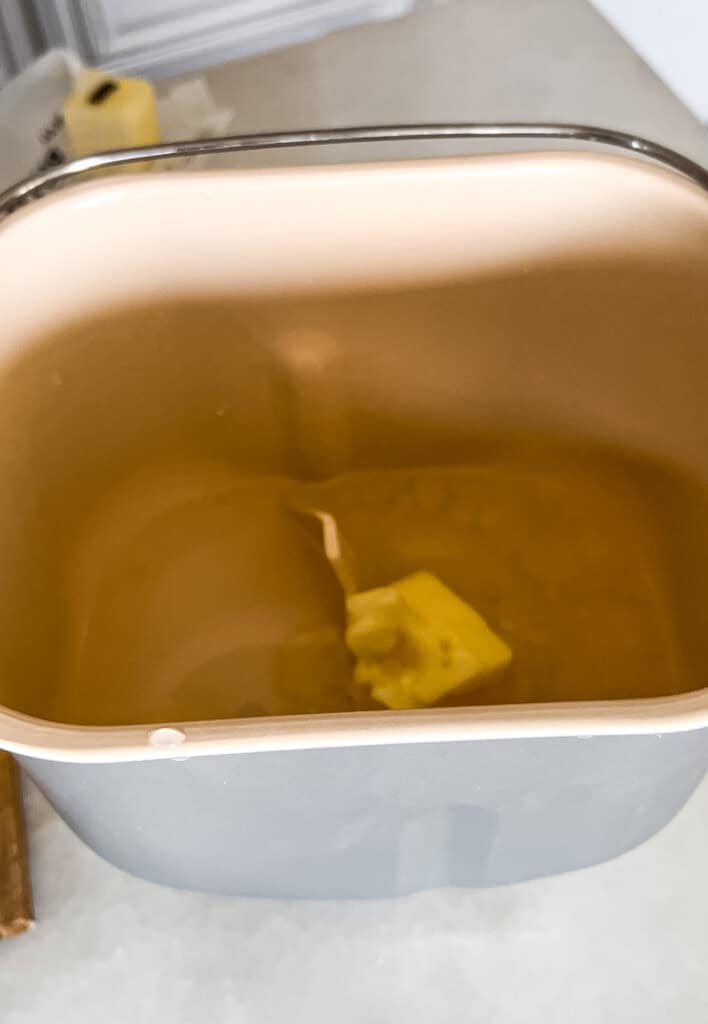
Add butter and wet ingredients to the bowl.
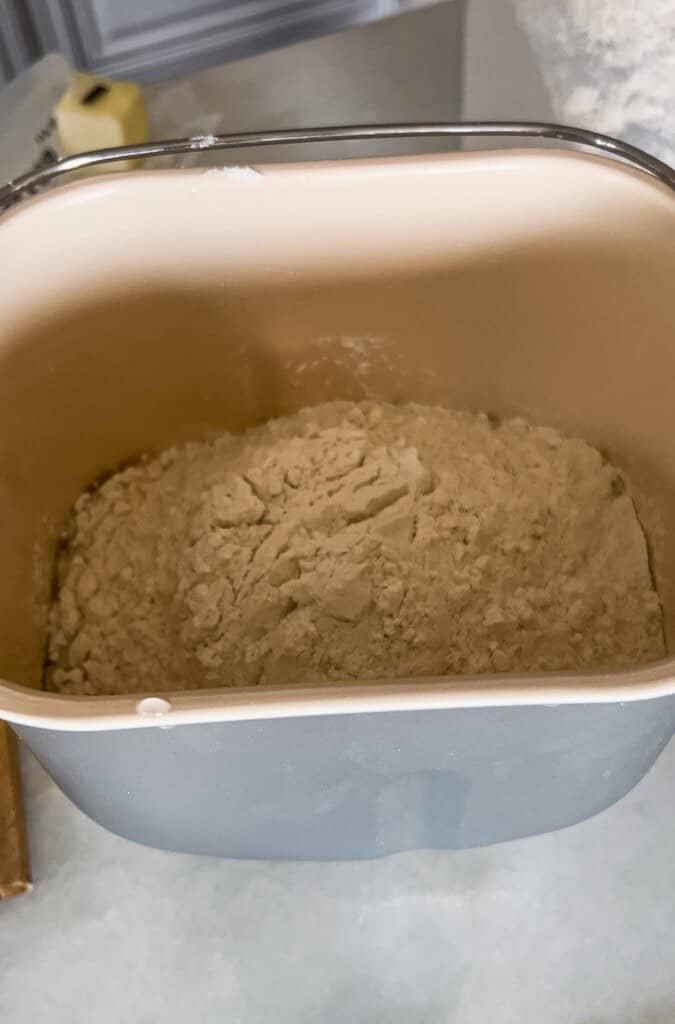
Add the dry ingredients on top of the wet.
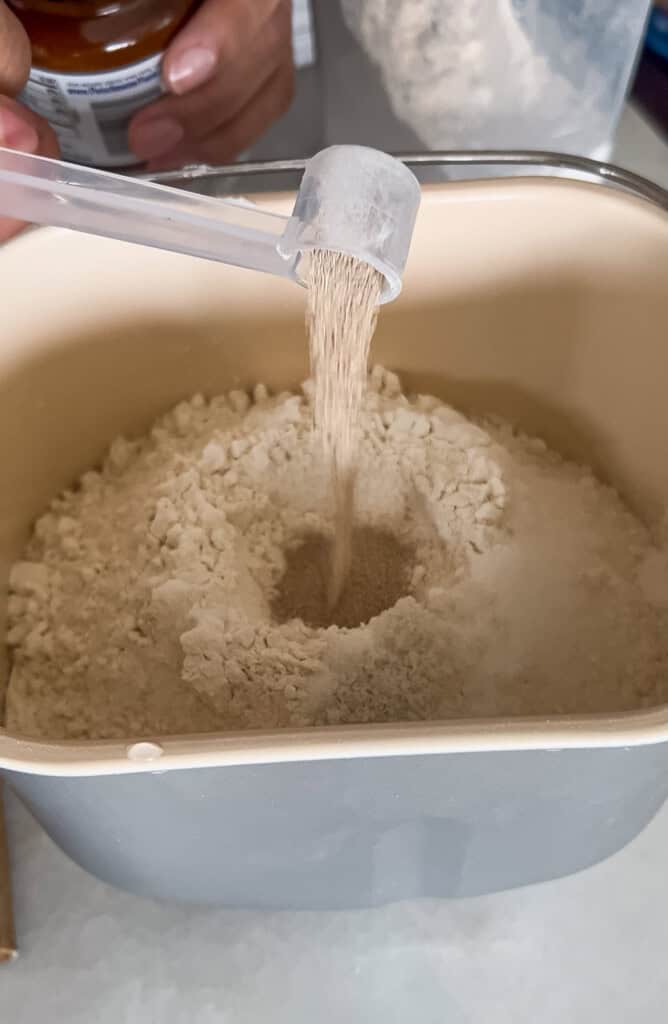
Make a well in the middle of the flour, and add the yeast.
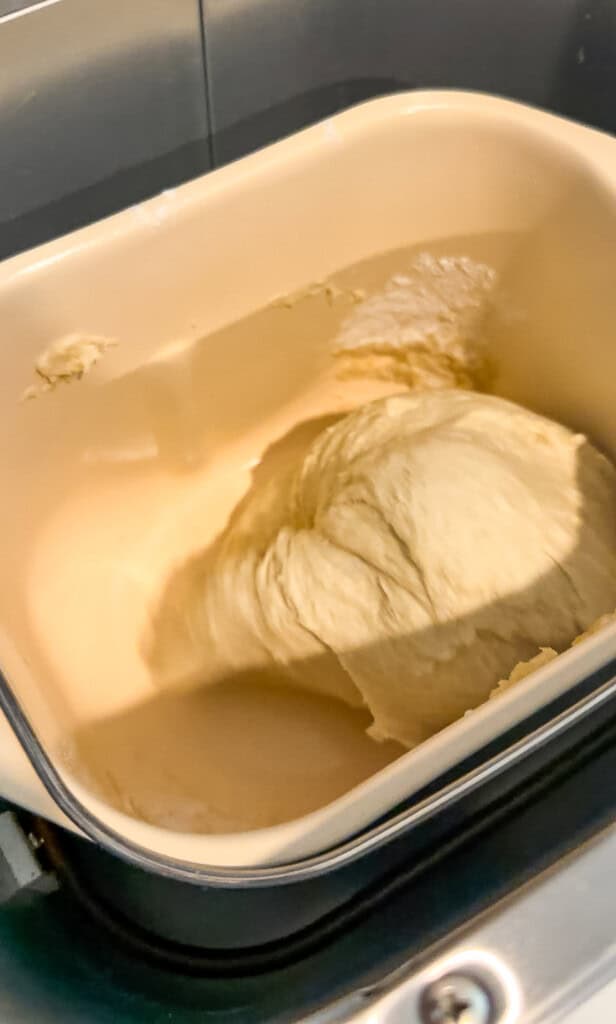
Let the bread machine work to make the dough.
Pro Tips for Soft, Fluffy Homemade Bread
Measure your flour correctly: Too much flour is one of the biggest reasons homemade bread turns out dense or dry. I recommend using a kitchen scale whenever possible.
Use fresh yeast: If your yeast has been sitting in the pantry for a while, check its expiration date. Old or improperly stored yeast can prevent the bread from rising.
Don’t use water that’s too hot: Hot water can damage the yeast. Warm water is all you need.
Pay attention to the dough, not just the clock: Rising times depend on your kitchen temperature, yeast activity, and dough consistency.
Avoid adding too much flour when kneading: A slightly tacky dough is normal and helps produce a softer finished loaf.
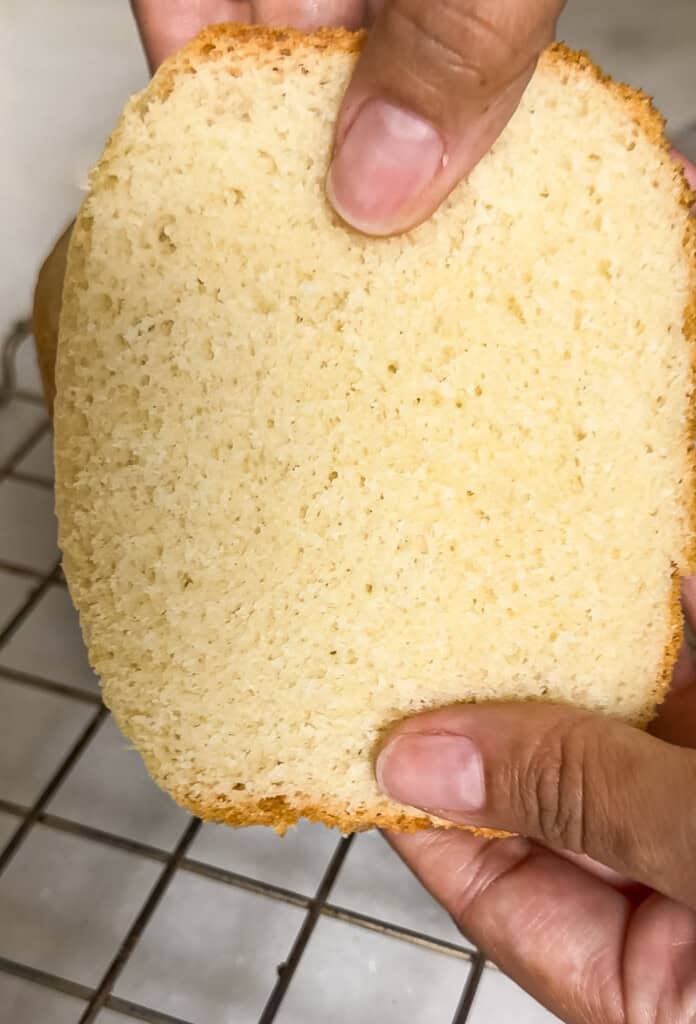
Let the bread cool before slicing: I know, this is probably the hardest part! But cutting into bread too early can leave the inside gummy or compressed.
Use a serrated bread knife. A sharp serrated knife helps you get nice, even slices without smashing your beautiful homemade loaf.
How to Make Homemade White Bread Without a Bread Machine
No bread machine? No problem! You can make this same delicious bread using a mixing bowl, your hands, and a regular oven.
Step 1: Mix the ingredients
In a large mixing bowl, combine the warm water, sugar, and instant yeast. Stir gently, then add the softened butter, salt, and bread flour.
Mix with a wooden spoon or dough whisk until a shaggy dough forms.
Step 2: Knead the dough
Transfer the dough to a lightly floured surface and knead for approximately 8–12 minutes, or until it becomes smooth and elastic.
The dough should feel soft and slightly tacky without sticking excessively to your hands. Try not to add too much extra flour, which can make the bread dense.
Step 3: Let the dough rise
Lightly grease a large bowl and place the dough inside. Cover with plastic wrap or a clean kitchen towel.
Let it rise in a warm, draft-free area for approximately 60–90 minutes, or until doubled in size.
Step 4: Shape the loaf
Gently press down the risen dough to release excess air.
If making two loaves, divide the dough evenly. Flatten each portion into a rectangle, roll it tightly into a log, and pinch the seam closed.
Place the shaped dough seam-side down into greased loaf pans.

Step 5: Let it rise again
Cover the pans loosely and allow the dough to rise for another 30–60 minutes, until visibly puffy and slightly above the rim of the pans.
Avoid letting the dough overproof, which can cause the loaves to collapse during baking.
Step 6: Bake the bread
Preheat your oven to 350°F.
Bake two smaller loaves for approximately 25–35 minutes, or until golden brown and the centers reach approximately 190–200°F.
A single large loaf will generally need longer, around 35–45 minutes, depending on its size and pan.
Step 7: Brush with butter and cool
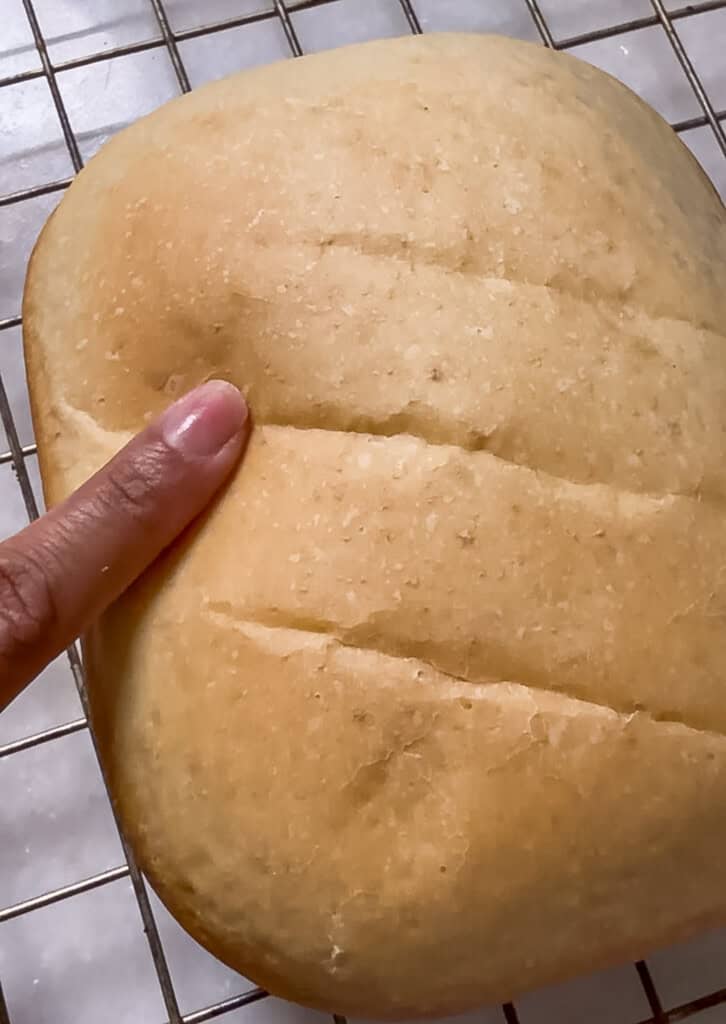
For an extra-soft crust, brush the tops of the warm loaves with a little melted butter.
Allow the bread to cool in the pans for about 5–10 minutes, then transfer to a wire rack to cool before slicing.
Bread Machine vs. Oven-Baked Bread: What’s the Difference?
Both methods produce delicious homemade white bread, but there are a few differences worth knowing.
Bread machine: Perfect for busy days when you want fresh bread without babysitting the dough. The machine does practically everything for you, including baking. The finished loaf may have a taller or more rectangular shape depending on your machine.
Traditional oven: Gives you more control over the loaf’s shape, crust, and baking process. You can make two sandwich loaves, brush them with butter, or experiment with different pans.
If convenience is your priority, the bread machine is hard to beat. But if you enjoy the hands-on process of baking, the oven method is just as rewarding.
FAQ
Can I use all-purpose flour instead of bread flour?
Yes! All-purpose flour can work in this recipe, although the texture may be slightly different. Bread flour generally creates a stronger dough and a chewier, more structured crumb. If using all-purpose flour, pay attention to the dough consistency and adjust the liquid or flour slightly if necessary.
Why is my homemade bread dense?
Dense bread can result from expired yeast, too much flour, insufficient kneading, or dough that hasn’t risen long enough. Make sure your yeast is fresh and allow the dough to rise until properly doubled.
Can I use active dry yeast instead of instant yeast?
Yes. Active dry yeast can be substituted, but it may rise more slowly. For the hand-mixed version, you can dissolve it in the warm water with the sugar first and wait until foamy before adding the remaining ingredients. For bread machines, follow the manufacturer’s yeast recommendations.
Ingredients
- 1⅓ cups Warm water lukewarm, not hot
- 4 tablespoons Butter unsalted, softened
- 3 tablespoons Granulated sugar
- 2 teaspoons Salt
- 4 cups Bread flour
- 2¼ teaspoons Instant yeast or bread machine yeast
Instructions
Bread Machine
- Be sure to add the ingredients in the order listed! Pour the warm water into the bread machine pan. Then add the softened butter, granulated sugar, and salt.
- Spoon the bread flour over the wet ingredients, making sure it covers the liquid. Make a small indentation in the center of the flour and add the instant yeast. Avoid letting the yeast touch the liquid before mixing begins.
- Place the pan into the bread machine. Select the Basic White Bread setting, 2-pound loaf size, and light or medium crust.
- After 5–10 minutes of kneading, check that the dough has formed a smooth, soft ball. If it's too dry, add water 1 teaspoon at a time. If it's too sticky, add flour 1 tablespoon at a time.
- Allow the machine to complete the full mixing, rising, and baking cycle, approximately 3–4 hours depending on your machine.
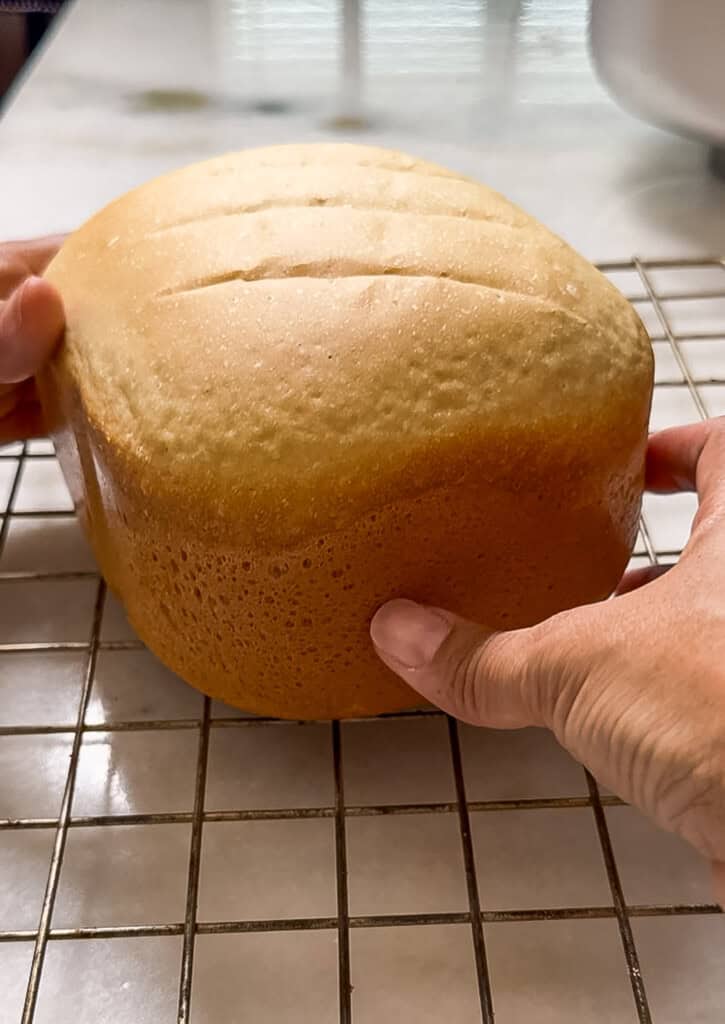
- After your bread is done, carefully remove the bread from the pan and transfer it to a wire rack. Cool for 20-30 minutes before slicing.
Traditional Oven Instructions
- In a large mixing bowl, combine the warm water, sugar, and instant yeast. Add the softened butter, salt, and bread flour. Stir until a shaggy dough forms.
- Transfer the dough to a lightly floured surface and knead for 8–12 minutes, until smooth and elastic. The dough should feel soft and slightly tacky.
- Place the dough in a lightly greased bowl, cover, and let rise in a warm area for 60–90 minutes, or until doubled in size.
- Gently press down the dough to release excess air. Divide evenly into two portions and shape each into a loaf. Place into two greased 8½-by-4½-inch loaf pans.
- Cover loosely and let rise for another 30–60 minutes, until the dough is visibly puffy and slightly above the edges of the pans.
- Preheat the oven to 350°F. Bake for 25–35 minutes, or until the tops are golden brown and the internal temperature reaches 190–200°F.
- Remove from the oven and brush the tops with melted butter, if desired. Cool in the pans for 5–10 minutes, then transfer to a wire rack to cool completely before slicing.
Nutrition
After you try this Homemade Bread recipe, I’d love to hear your thoughts. Comment below and follow me on Facebook, Instagram, Pinterest, and YouTube for more delicious recipes!
Related:
Looking for other recipes like this? Try these: